Windsurf · Invention
1972
Ten Cate takes the Windsurfer to Europe
A Dutch textile company signs the licence to build and sell Windsurfers in Europe; within three years Europe buys far more boards than America.
11,000a year
Windsurfers sold by Ten Cate by 1975
Europe first saw the Windsurfer in pictures, above all the 1971 DuPont Magazine cover. Martin Spanjer, an executive at the Dutch textile group Nijverdal-Ten Cate, which was looking for new business away from low-wage competition, wrote to the Americans. In December 1972 the company announced an agreement with Windsurfing International to produce and distribute Windsurfers for Europe, North Africa and the Near East.
Production started at once and the first European-built boards went on sale in early 1973. In the Netherlands a Windsurfer would cost 1,190 guilders, for a sport that was, as the company put it, not yet generally known. Copies appeared immediately: in March 1973 Ten Cate won an injunction against a look-alike shown at the HISWA boat show in Amsterdam.
The effect was dramatic. From 1973 more Windsurfers were sold in Europe than in the United States, and by 1975 Ten Cate alone was selling about 11,000 boards a year. Germany and France became the largest markets, and Europe, not California, became the centre of the sport.
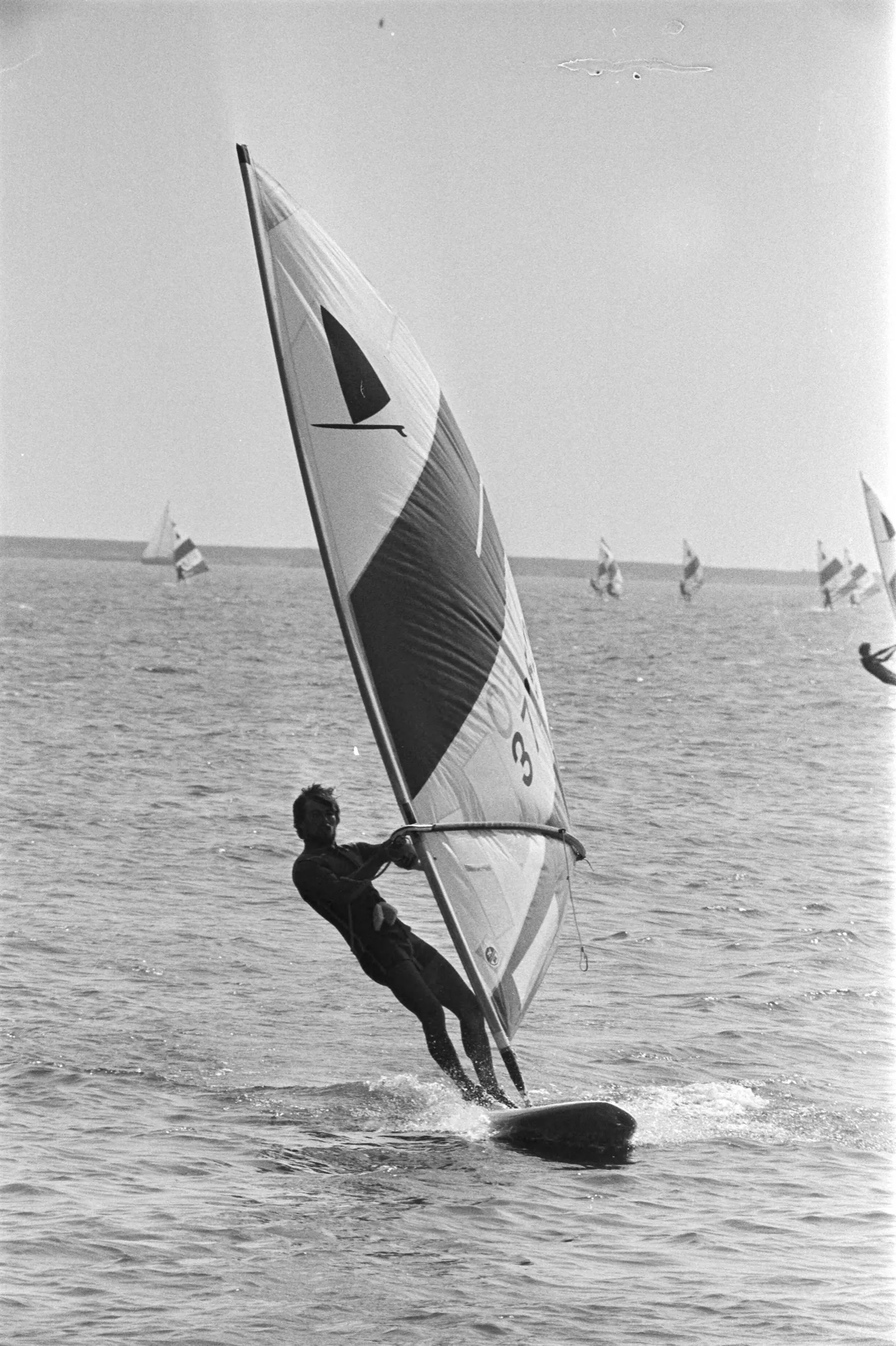
Rob C. Croes / Anefo · Nationaal Archief · CC0
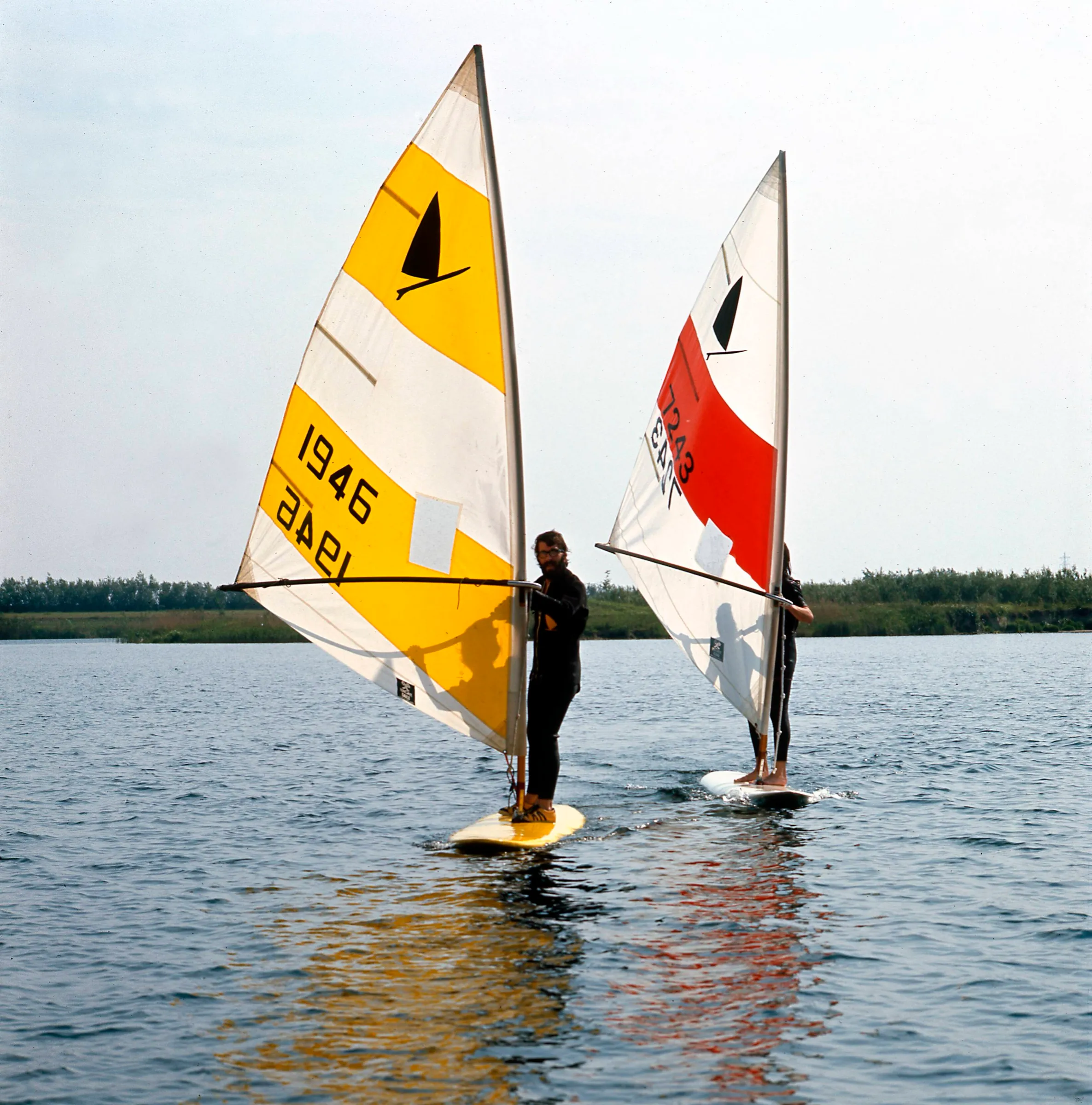
Harry Pot / Spaarnestad Photo · Nationaal Archief · Public domain